


A Complete Technical Guide The block industry is among the pillars of construction in the world. Blocks are a basic material, whether it is the construction of small homes, mega infrastructure, or government houses. The companies have a significant decision between a block production machine vs clay block machine today. They both have different benefits, expenses, and forms of production.
What is a Block Production Machine?
A block production machine is a high-tech automated or semi-automated machine that is meant to produce cement, fly ash, or interlocking blocks. These machines tend to press and mold using hydraulic, pneumatic, or electric. Depending on size and configuration, production capacity is between 8,000 and 25,000 blocks per day.
What is a Clay Block Machine?
A more conventional system is a clay block machine. It refines natural clay, moulds and fires the product in kilns. Manual machines used in the production of clay blocks are operated by hand, and those available in the automatic clay block plants are operated by automated machines, but they still heavily rely on raw clay material. The daily production may also be very different, 5,000 to 15,000 blocks.
Raw Materials
Block Production Machine: It makes use of cement, fly ash, sand, stone dust, and, in some cases, lime. Elastic to the sourcing of raw materials.
· Clay Block Machine:
It depends on natural clay and water. Additives, sometimes, are employed to give strength.
· Production Process
Block Production Machine: Automated molding, pressing, curing, and stacking. No kiln firing required.
· Clay Block Machine:
Clay casting and high-temperature firing of clay in a kiln.
Energy Consumption
· Block Production Machine:
This is energy efficient, particularly when applied in hydraulic systems.
· Clay Block Machine:
This takes a lot of energy since there are kilns.
Block Strength and Quality
· Block Production Machine:
Sameness in density, high compressive strength, and correct size.
· Machine Clay Blocks:
The quality will vary according to the type of soil and the kiln process.
Cost Efficiency
· Block Production Machine:
It has a high initial investment and has low long-term labor costs.
· Clay Block Machine:
This costs less upfront but requires energy and labor costs at the time.
Green and Long-term Production
Clay Block Machines
· Relide on the excavation of clay that may damage productive land.
· The firing in the kiln emits CO2 and enhances the carbon footprint.
Block Production Machines
o Recycle industrial waste products such as fly ash, and this cuts down on landfill.
o No kiln was needed, reducing greenhouse emissions.
o Environmentally friendly models are in line with the world's green building standards.
According to a study carried out by the International Journal of Sustainable Construction, cement-based machines for producing blocks cut down the emissions by 40 percent of the clay-based techniques.
Use in the Construction Industry
· Manual Clay Block Machines: Ideal for rural house construction, small-scale development, and local suppliers.
· Automatic Block Production Machines: Applications in mega projects, industrial complexes, government housing schemes, and smart city development are very common applications.
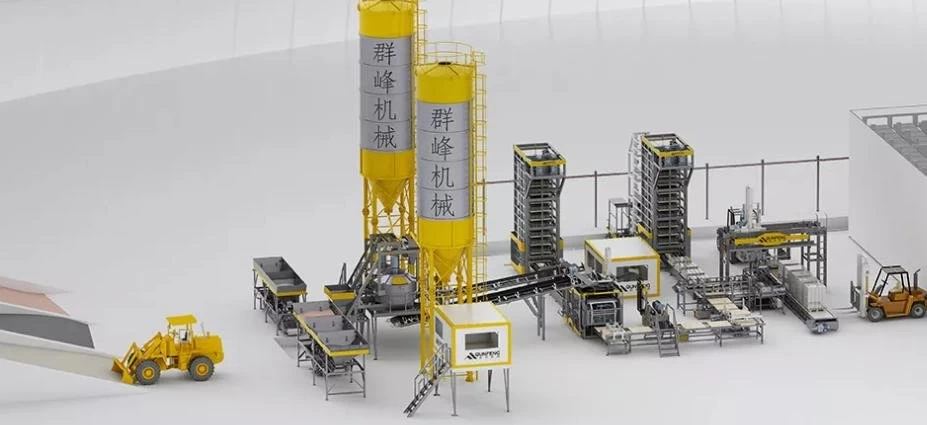
These machines make a direct contribution to the building materials machinery industry, hence necessitating them as crucial construction machines.
More Profitable Cost Comparison?
Cost is a critical factor in planning between a block production machine vs clay block machine.
Block Production Machine:
Such machines require a greater initial start-up cost, up to 80,000. Nevertheless, they are repaid at a quicker rate owing to their great production, low workforce requirements, and the capability to operate on energy-efficient platforms. Block machines that operate automatically also help save on the wastage and enhance consistency, resulting in constant profitability. This machine is the wiser option with companies that intend long-term growth and a supply level that is industrial in nature.
Clay Block Machine:
Conversely, a clay block machine is cheaper at the initial stage, and it begins at approximately 10,000 dollars. It is best suited to smaller companies or a rural arrangement where labor is not hard to find. Continuing expenses like fuel, kiln running costs, and increasing man-power demands can absorb profits. With increasing energy prices, it is no longer competitive to produce clay blocks as compared to modern machines.
As it can be said in layman's terms, the machine that produces blocks needs more investment, but in the long run, it generates higher profitability. In the meantime, a clay block machine is simpler to initiate but less effective in the long term.
Standards and Regulations in the Industry
In the comparison of a block production machine vs clay block machine, one must examine the adherence to international standards of the industry.
Block Production Machine:
The modern block manufacturing equipment is constructed to correspond to the international construction standards, meaning that it must produce the same compressive strength, dimensions, and water absorption. Numerous automated machines utilize hydraulic or vibration technology and yield blocks that comply with ISO, ASTM, and EN building codes. The machines are also eco-friendly since they minimize waste, save energy, and minimize emissions, which is in line with the requirements of sustainable construction.
Clay Block Machine:
Conventional clay block machines do not avoid a lot of kiln processes. They have to abide by the laws of extraction permits on clay, emission of emissions at the kiln, and the use of fuel. In a series of countries, they are winding up inefficient and polluting kilns through environmental protection regulations. The producers of clay blocks are now obliged to switch to cleaner technologies or go hybrid to ensure that the carbon footprint is as minimal as it can be.
As the world pressures governments to become carbon neutral, they are advocating tougher actions against the old ways. Investment in a modernized block production machine is the answer to the future of any business intending to expand its activities in the future in order to be compliant, to gain acceptance in the market, and to increase its viability in the long term.
Fly Ash Blocks are promoted by the Government:
Most countries are encouraging fly ash block plants in order to cut down on carbon emissions. These are machines that not only recycle industrial wastes, but also give consistent quality blocks. Fly ash blocks prove to be a better option compared to traditional clay blocks because of policies promoting the saving of energy and conservation of resources.
Declining Use of Clay Blocks:
Clay extraction is also restricted by the enforcement of stricter environmental laws. Conservation of agricultural land has become a priority, and the traditional clay block kiln has greater regulatory barriers. This trend is speeding up the use of automatic production machines for blocks.
A study published on ResearchGate indicated that over 65 percent of new plants that make blocks in Asia have modern production machines. This shows a resolute shift in the industry towards sustainability, efficiency, and adherence to global standards
Prospects of Block Making
Automation, sustainability, and efficiency are changing the future of the block industry. As the construction industry goes global, the call of the builders is for blocks that are strong and uniform, and at the same time, eco-friendly. The trend is compelling manufacturers to abandon the old ways of producing blocks by hand to use more advanced machines for producing blocks.
· Automated machinery with hydraulic and vibration technology provides dimensional accuracy, increased compressive strength, and less waste. They also reduce the dependence on labor and hence ideal for industrial projects on a large scale. Simultaneously, environmentally friendly machines consuming fly ash, recycled aggregates, and low-energy processes are becoming popular across the globe, with governments becoming more rigid in carbon reduction measures.
· In a span of ten years, analysts have forecasted that the world will be dominated by the use of block production machines that will substitute most of the old and obsolete kilns that were made using clay. The introduction of digital monitoring, AI implementation, and intelligent sensors is also likely to be implemented in future systems and enhance productivity and quality control even more.
In the case of businesses that want to be profitable in the long run, using modern block machines is no longer a choice but a way of remaining competitive.
Conclusion
The decision that should be made is between the block production machine vs clay block machine, depending on the objectives of the business. Small and rural setups with low budgets can continue to use clay block machines. Nevertheless, contemporary machines in the production of blocks are efficient, sustainable, and economical. Investment in technology in block production is the better choice in those businesses that are focused on large-scale expansion and adherence to the norms of green buildings. To have an insight into the sophisticated block production equipment, Qunfeng, a reputed company in building material machinery, can be visited.