


The task of a block machine that produces solid blocks is a simple one in theory: pour concrete into the mould, tam it down and eject a block.
Solid blocks do not give much leeway in practice as they appear.
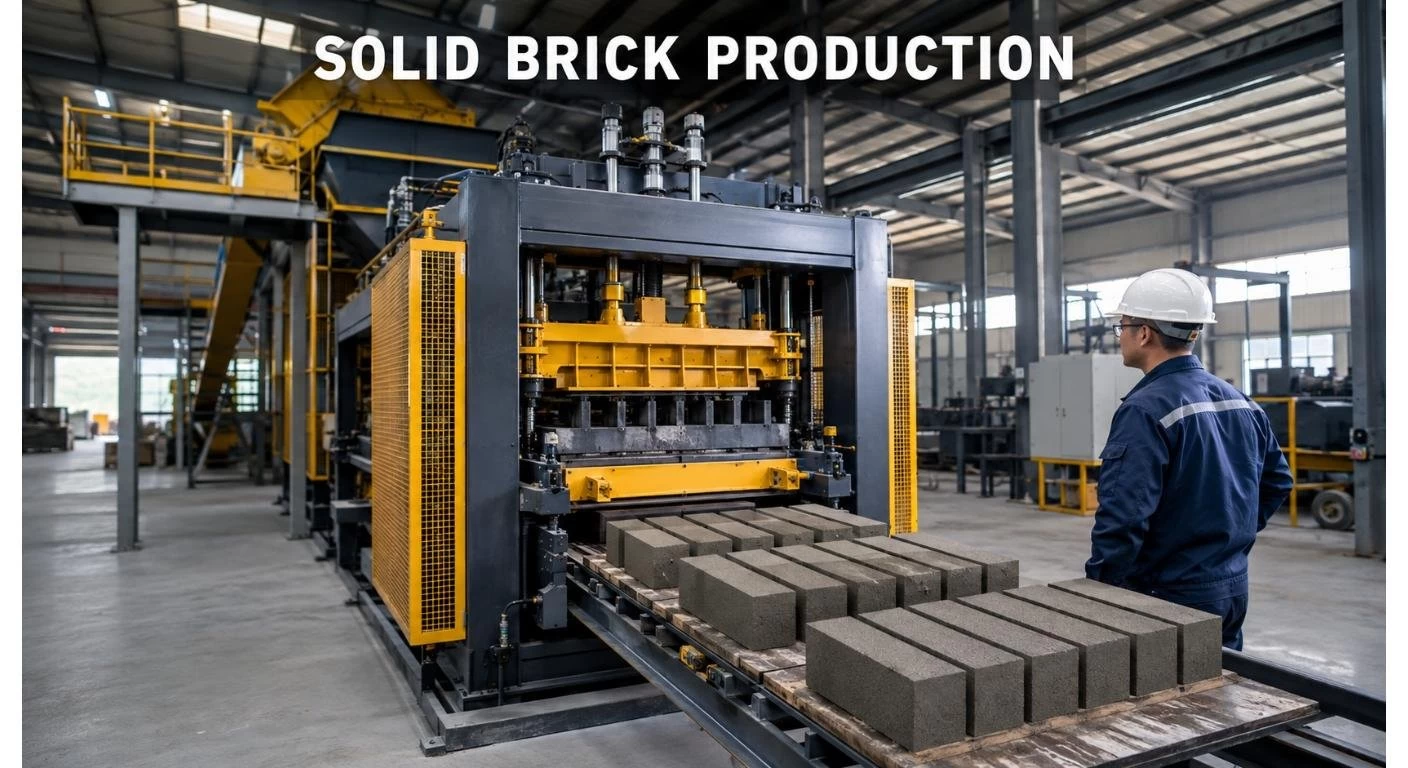
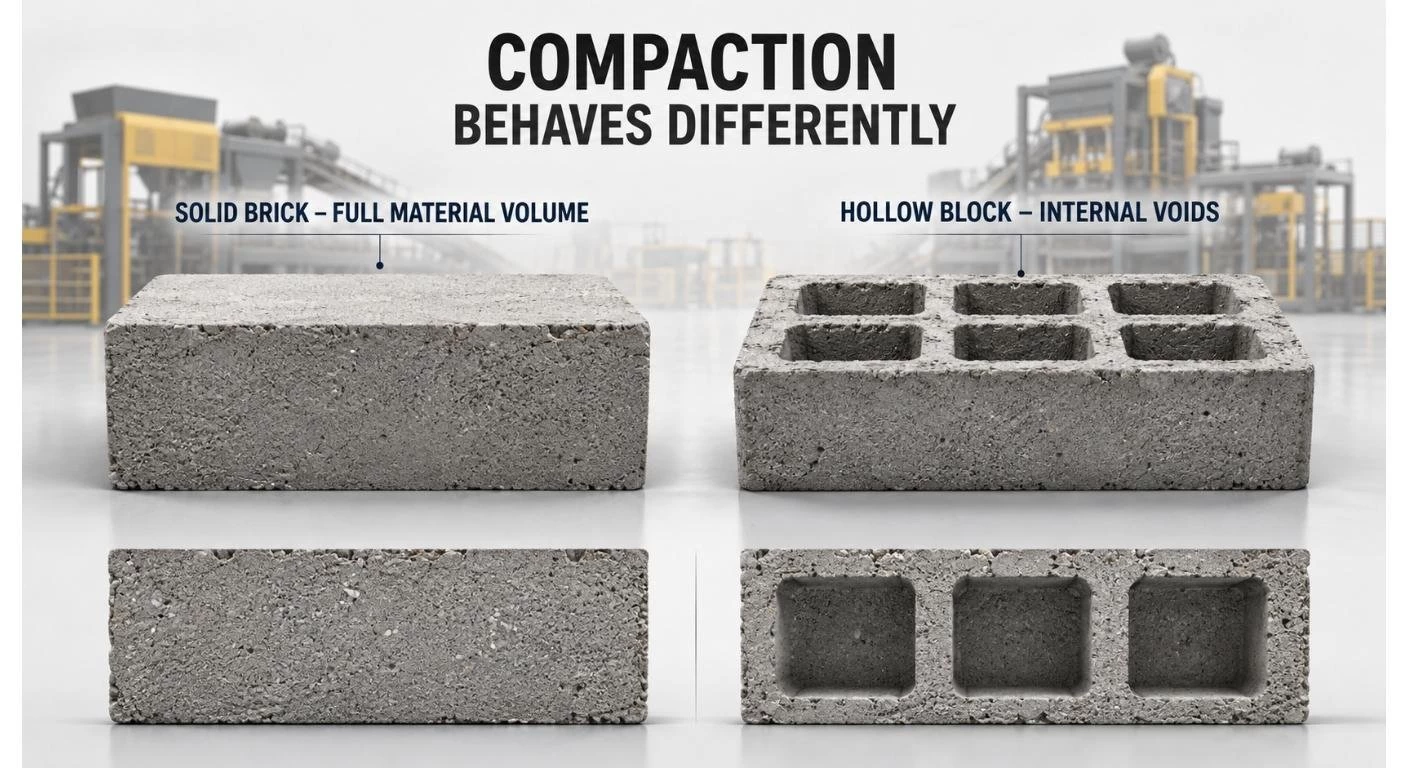
No big holes to minimize material consumption and/or conceal filling irregularities. Each block contains more concrete and differences in moisture, feeding and compaction soon build up to differences in weight, surface and production costs.
This is a new way for a solid-block producer to view the machine.
Compaction is the first step in the production of solid blocks.
With hollow blocks, the manufacturer will place a lot of emphasis on the speed of the cycle and the size of the mold. When faced with solid blocks, compaction quality should be given as much consideration.
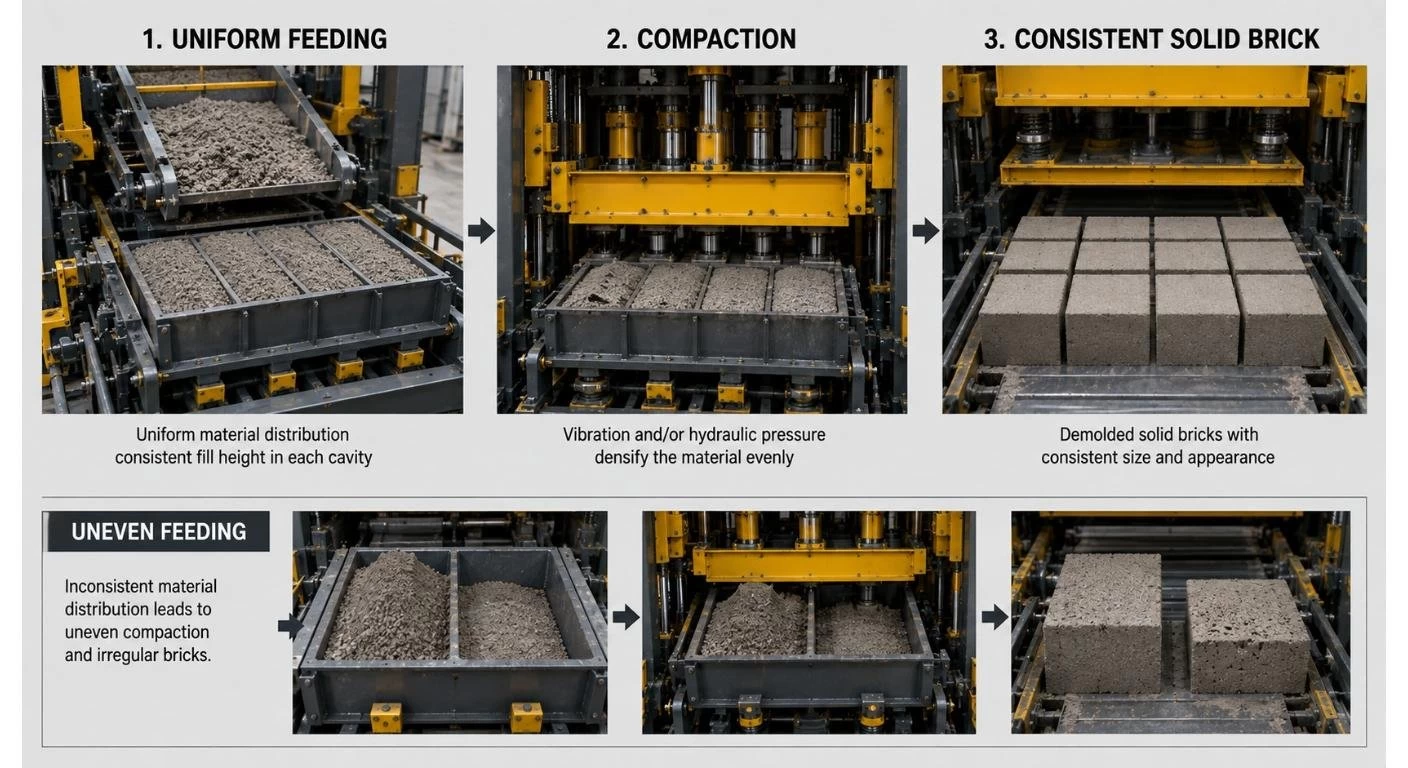
The form needs a fairly tight volume to contain the mix and the mold must be able to compact evenly. The weak filling can cause an imbalance in compactness of the one part in comparison to the other part. Instability of pressure or vibration may make it more difficult to maintain block-to-block consistency.
Qunfeng provides vibration-forming machine as well as hydraulic pressing machine. It can switch molds for solid blocks, hollow blocks, pavers and curbstones and its QS1000 concrete block machine adopts servo vibration. The QP600 hydraulic block machine on the other hand is specifically targeted at dense solid blocks and pavers and features 600-ton static pressure.
No single name should be used to select either approach. First product specification and then raw material.
Vibro-Forming or Static Pressing?
This is another of the more useful questions that can be put to a solid-block buyer.
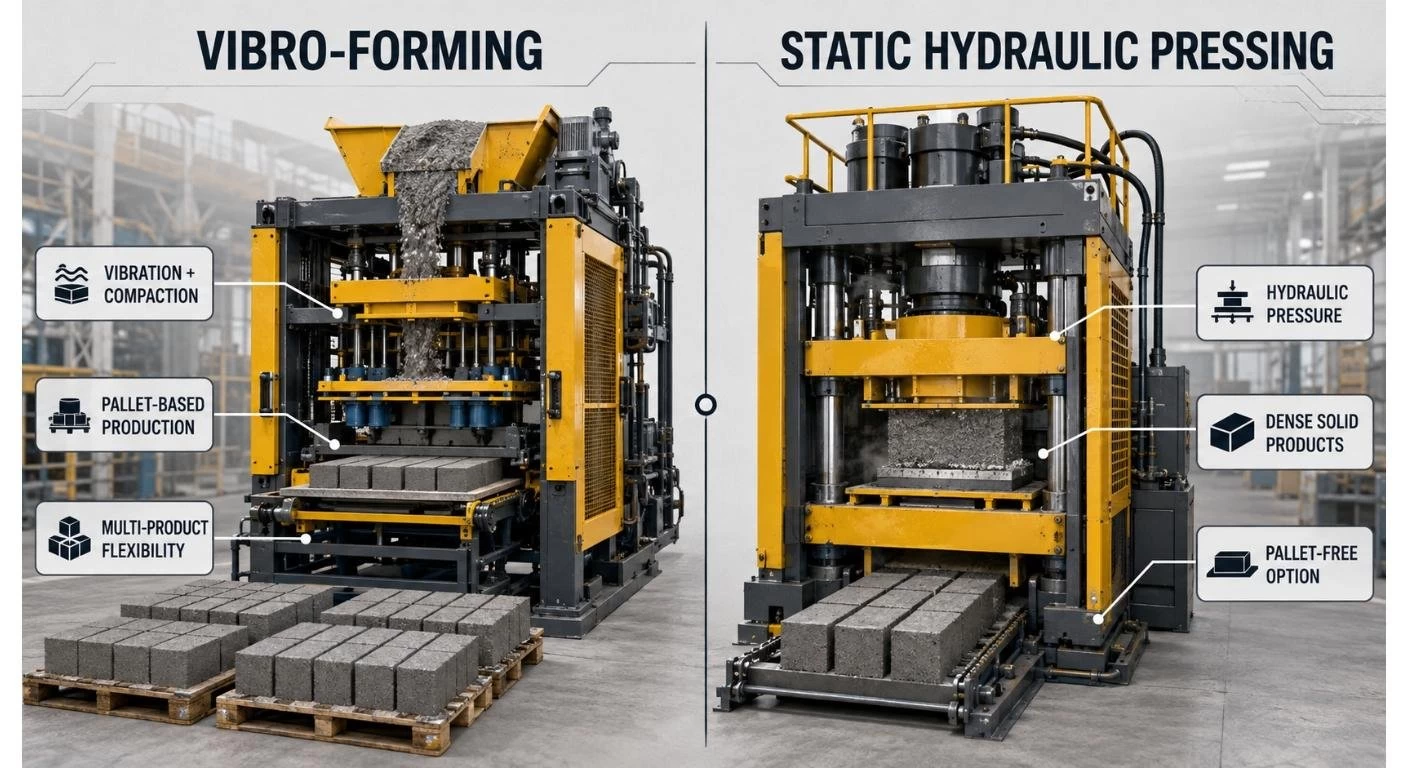
The conventional block line makes the mold compact the concrete mix, which is relatively dry, by vibrating and applying pressure to the mix. Gives flexibility in the same factory, where the production of solid blocks and hollow blocks or other concrete products are to be switched between.
Static hydraulic pressing is a different way. The QP-series machines from Qunfeng feature high hydraulic force, and are geared to dense blocks and paving products. For instance, the QP800 hydraulic block making machine has an 800 ton pressing system and among its primary applications it includes the production of solid blocks.
But the difference has value to consider before looking into the headline capacity of a dedicated solid-block plant.
Production Situation | Point to Evaluate |
Mainly solid blocks | Compaction consistency |
Solid + hollow blocks | Mold-change flexibility |
Dense pressed products | Hydraulic pressing option |
Variable recycled material | Feeding and mix control |
High material consumption | Unit material cost |
Limited pallet budget | Pallet-free process option |
It's easy to forget to feed till Block Weight begins to move.
Blocks are made from a significant quantity of material per block.Compaction alone is not necessarily a solution to overcome an imbalance in the amount of mix in one part of the mold compared to another. This is the reason behind feeder design.
The double motor feeding and micro vibration system of the QP800 ensures a more uniform material spread before pressing. Qunfeng says that the system is a feeding balance and uniformity-improved system.
Do not test just the best looking block of a batch in a factory trial. Measure the weights of a number of sample pieces taken from each of the different cycles and search for a trend.
One good sample is not as important as consistency.
Sample Check | What to Record |
Dimensions | Length, width and height |
Unit Weight | Compare several cycles |
Edge Condition | Chips or damaged corners |
Surface | Voids or uneven texture |
Color | Variation across batch |
Demolding | Sticking or deformation |
Batch Position | Where sample came from |
Mix Condition | Moisture / material batch |
Better is NOT More!
There is a large press that can crush the material. Can't convert an an unstable recipe into a stable production process.
Factors that influence the mold filling and the behavior of the block after pressing are the aggregate grading, the moisture of the aggregate and the aggregate recycled-material variation.
This becomes even more crucial in the case of the factory when the intention is to utilize materials from industrial or municipal solid wastes. The block production solutions of Qunfeng involve projects to make processed wastes into hollow blocks, paving stones, curbstones and solid blocks.
It is important to note that representative materials from the local area should be included in the production plan prior to final equipment selection and not assume one mix will behave as another.
Pallets Can Become a Hidden Cost.Pallets Can Be a Hidden Cost.
Production pallets are required to circulate between the molding and transport / curing in a vibration block plant.
When the quotation focuses on the main machine, that cost can be easily overlooked.
There are some static pressing systems which do not use the same method to make solid blocks. The QP600 is a machine that adopts the pallet-free technology, and Qunfeng's QP900 adopts board-free operation for high-density blocks production.
When it comes to production pallets that are eliminated, it's more than just the machine price for a plant producing large quantities of dense products. It can also alter the way the fresh block comes off the press and pallet storage and replacement planning.
It's a plant level question, not a brochure feature.
Now Count Saleable Blocks, Not Only Cycles
Solid blocks are heavy duty products. A higher cycle rate is beneficial only if feeding, compaction and handling are constant.
When asking about machines, please seek the following information:
l pieces/cycle for your block size;
l expected cycle range;
l shift output;
l rejected-product assumptions;
l The amount of material used for each finished unit.
As a reference, Qunfeng is able to print 39 pieces in one cycle for a 240 × 53 × 115 mm solid block based on its QP800 specification. It also lists output for individual block size on its QS1300 page, instead of providing one single production number.
The latter method is more suitable for the planning of the raw material and stocks.
Whenever the Block is Demolded, Think About it!
The press isn't the end of the process.
There is still a considerable amount of work to be done before the fresh solid blocks can leave the molding area without being deformed, without collision and without unnecessary handling. The amount of material contained in each unit is high and downstream transport should be considered.
Static-pressed products can also operate under a unique handling system as opposed to traditional pallet handling blocks. Qunfeng's high density products can be immediately stacked, which can affect the amount of floor and curing-handling equipment required, says Qunfeng.
Review a layout from the mold to the storage. That frequently reveals issues, not evident in the specification of the main-machine.
Dedicated machine or Flexible machine?
Not all factories want to continue manufacturing solid blocks in perpetuity.
For customers that are purchasing hollow blocks, pavers or curbstones as well, a mold-change block machine might be a more commercial option. The QS1000 from Qunfeng is shown in particular as a multi-product machine which can switch between these product families.
A plant may place more value on hydraulic pressing instead, or in special feeding if it is in the business of manufacturing high density solid blocks or pressed paving products.
The key is to determine which business you're building, before determining which machine is more advanced.
Final Selection Check
Prior to ordering the block machine for making blocks of solid blocks make a product sheet which consists of product dimensions, daily requirements, raw materials, density or quality requirements and future varieties of products.
Next, talk about feeding, compaction, demolding and downstream handling around that block.
But the correct machine for solid-block production is not necessarily the one which presses the hardest or cycles the fastest. It's the one that will ensure the finished block is consistent without making all the other blocks at the factory unnecessarily expensive.
FAQ
Q1. Is it possible to make both solid and hollow blocks using one block machine?
Yes, several of the vibration block machines can be used to alter molds for various products. Please check the mold size, product height and desired feeding configuration first.
Q2. Which is better for solid blocks, hydraulic pressing or not?
Can be very suitable for dense solid blocks and paving products. The selection still remains to be the best depending on raw material, product quality and the range of product required.
Q3. Why is it important to feed solid blocks?
More material in the entire mold cavity is a solid block. When the filling is not even, it can thus impact block weight, compaction and consistency.
Q4. Should production pallets be used for all solid block machines?
No. Pallets are commonly used in conventional vibration lines and some hydraulic static-press machines are available in pallet free lines.
Q5. What information do I need to give before requesting a machine?
Provide block size, raw materials, shift production and planned product assortment. Some pictures or sketches of the completed block are also helpful.